Hyaluronic Acid
Nature's most powerful humectant — and why molecular weight determines everything
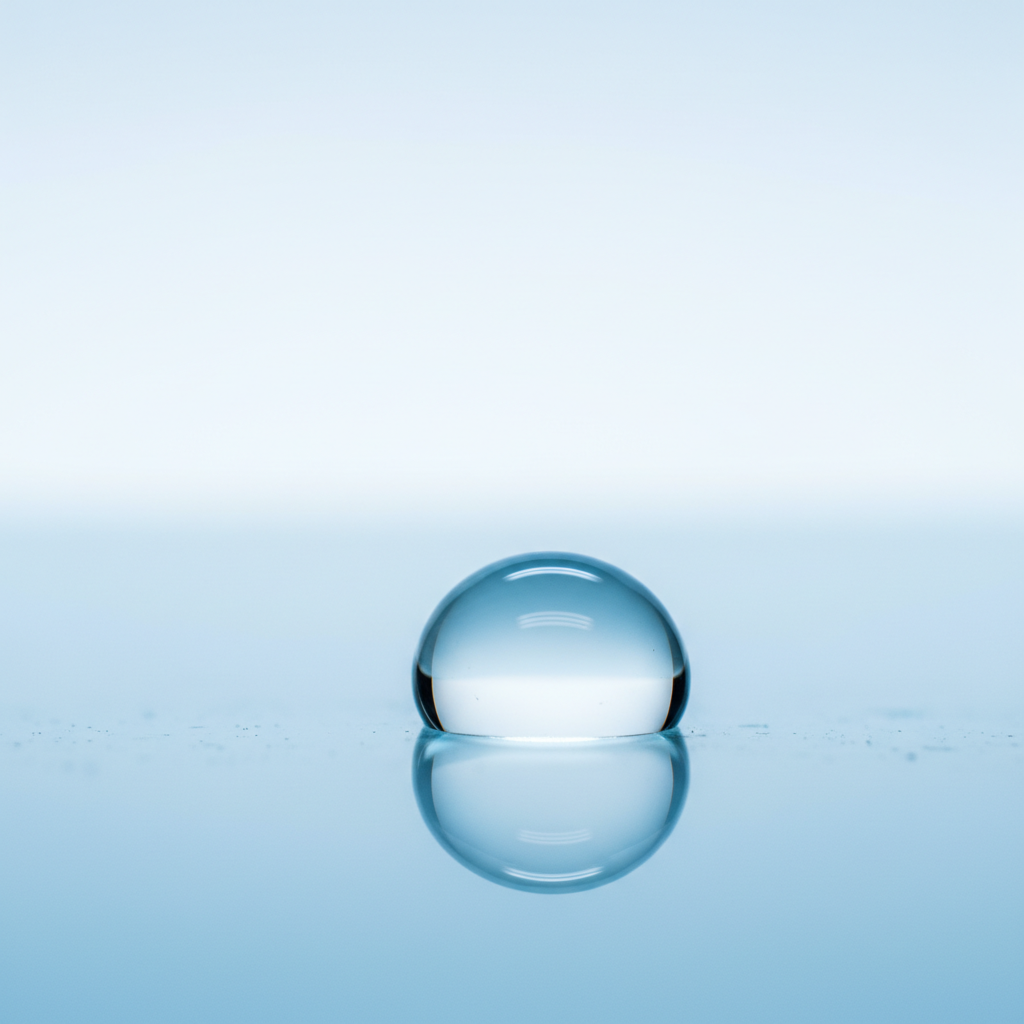
Hyaluronic acid (HA) is a naturally occurring glycosaminoglycan found in highest concentration in skin, joints, and connective tissue. In the dermis it forms a water-binding matrix capable of holding up to 1,000 times its own weight in water, providing the structural cushioning and surface plumpness characteristic of young skin. HA levels decline substantially with age and UV damage — making topical replenishment one of the most well-supported and immediate-effect hydration interventions available.
How It Works
Hyaluronic acid's primary mechanism is hygroscopic: it is one of the most water-attracting molecules in biology. As a humectant, it draws water from deeper skin layers and, in humid conditions, from the environment into the stratum corneum, increasing measurable surface hydration within minutes. Molecular weight determines depth of action. High molecular weight HA (above 1,000 kDa) remains on the skin surface, creating a moisture-sealing film that reduces transepidermal water loss (TEWL). Medium molecular weight HA (50–1,000 kDa) penetrates the outer epidermis. Low molecular weight HA (under 50 kDa) and sodium hyaluronate (the salt form, which penetrates more readily) reach the viable epidermis, where emerging evidence suggests they may stimulate fibroblast activity and endogenous HA synthesis. Multi-molecular-weight formulas targeting all three skin depths simultaneously produce the most comprehensive and sustained hydration response.
What the Research Shows
Hyaluronic acid's clinical evidence for skin hydration is extensive and consistent. A 2014 study in the Journal of Cosmetic Dermatology demonstrated significant improvements in skin hydration and elasticity after 8 weeks of topical HA use. A 2021 comprehensive review in Polymers confirmed that topical HA reliably improves skin hydration, TEWL, elasticity, and rough texture across multiple well-designed trials. Research specifically on low-molecular-weight HA confirms deeper penetration and measurable increases in epidermal moisture levels versus high-MW-only products. The immediate visible plumping effect — most pronounced with dehydration-type fine lines — is one of the most reproducible results in all of topical skincare.
How To Use It
Apply hyaluronic acid serum or essence to damp skin immediately after cleansing. HA needs ambient moisture to draw from — applying to completely dry skin in a low-humidity environment can draw moisture from the deeper dermis and allow it to evaporate from the surface, paradoxically increasing dryness. Spritz with a fine water mist first if your skin is very dry before application. Use morning and evening. Always seal with a moisturizer or emollient to trap the moisture HA has drawn into the skin — without an occlusive or film-forming seal, the benefit is partially lost. For intensive hydration (dry climate, post-procedure recovery, or after retinol use), layer 2–3 thin applications.
Layering Guide
Hyaluronic acid is the most universally compatible skincare ingredient — it layers safely and beneficially with everything. Apply it before or after niacinamide (either order works), before vitamin C (apply vitamin C first if using together in the morning), before retinol (HA creates a buffer layer that reduces retinol irritation), and under peptides, ceramides, and PDRN serums. The only meaningful rule: always finish with a moisturizer over HA to prevent evaporative moisture loss. HA is particularly valuable as the first layer after cleansing in any multi-step routine because it maximizes the hydration baseline before actives are applied.
Cautions & Compatibility
Hyaluronic acid is among the safest skincare ingredients available — true HA allergy is exceptionally rare. Those living in very dry climates should be especially diligent about sealing with a moisturizer after application to prevent paradoxical drying. Vegan consumers should check sourcing — most commercial HA is produced by microbial fermentation (vegan-suitable), but some older formulations use rooster-comb-derived HA (animal-derived). Fragrance-free, single-ingredient HA serums are the safest choice for reactive or sensitized skin. Multi-molecular-weight formulas with both HA and sodium hyaluronate will outperform single-weight products.
Product Picks
Multi-Weight Hyaluronic Acid Serum
Multi-molecular-weight HA for all skin depths
HA + Polyglutamic Acid Serum
Enhanced HA with polyglutamic acid (holds more water)
Sodium Hyaluronate Penetrating Moisturizer
HA-rich moisturizer for all-day hydration
As an Amazon Associate we earn from qualifying purchases. Links open Amazon search results.
Related Ingredients