Affiliate disclosure: This article contains Amazon affiliate links. As an Amazon Associate, Glowstice earns from qualifying purchases — at no extra cost to you. Our editorial recommendations are independent of these partnerships. Learn more.
The LED face mask market spans from $20 to $450+. The good news: effective LED therapy does not require the highest price point. The bad news: many budget devices use incorrect wavelengths, deliver insufficient irradiance, or use cheap LEDs that drift from their stated wavelengths within weeks. This guide gives you the technical checklist to evaluate any budget device intelligently — and our ranked picks for devices under $100 that meet the minimum criteria for genuine photobiomodulation.
What to Look For in a Budget LED Device
Not all LED devices are created equal, regardless of price. These are the minimum specifications an effective device should meet:
Wavelength specificity: The device must specify its exact wavelength(s) in nanometres — not just 'red light' or 'infrared.' The clinically validated ranges are 630–660nm for red light and 820–850nm for near-infrared. Devices stating only 'red LED' without a wavelength figure cannot be evaluated for efficacy.
Irradiance data: The best brands provide irradiance figures (mW/cm²) measured at a specified distance. For at-home use, a minimum of 20–30 mW/cm² at skin contact distance enables accumulation of therapeutic doses within 10–20 minute sessions. Brands that provide no power density data are difficult to assess.
LED count and coverage: Full-face masks need adequate LED density to treat all facial zones simultaneously. Look for masks with 100+ LEDs for adequate coverage; devices with very low LED counts have significant dead zones.
Regulatory status: FDA clearance (USA) or CE marking (Europe) for a skincare or pain relief indication indicates the manufacturer has demonstrated safety and submitted some evidence of effectiveness. It is not a guarantee of optimal efficacy, but devices with no regulatory clearance have a lower baseline confidence level.
Warranty and return policy: Reputable budget brands offer at minimum a 30-day satisfaction guarantee. LED diode quality varies considerably at lower price points; a manufacturer unwilling to offer returns has limited confidence in their own product.
Red Flags That Reveal Ineffective Devices
These characteristics identify devices unlikely to deliver genuine photobiomodulation benefit:
No wavelength specification: Any device marketed as 'red light therapy' without specifying a wavelength in nm is either uninformed or deliberately vague. This is the single clearest quality indicator.
Visible light only claimed as 'infrared': Near-infrared (810–850nm) is invisible to the naked eye. If a device marketed as 'infrared' shows visible deep red glow, it is likely using 700–780nm wavelengths — not the 810–850nm range with documented anti-aging evidence. Always check specifications.
Extremely low LED count: Full-face masks with under 50 LEDs cannot provide adequate coverage. Marketing imagery showing dense LED arrays is meaningless without published LED count specifications.
No safety certifications mentioned: Devices sold without UL, CE, or FDA involvement should be viewed with significant scepticism, particularly those sold without any country-of-origin information.
No session time guidance: Effective protocols require specific session durations calibrated to the device's irradiance output. Devices with no usage guidance ('use for as long as desired') suggest the manufacturer has not calibrated their protocol to their device's actual output.
Related Reading
Editor's Product Picks
Affiliate links — we earn a small commission at no extra cost to you.
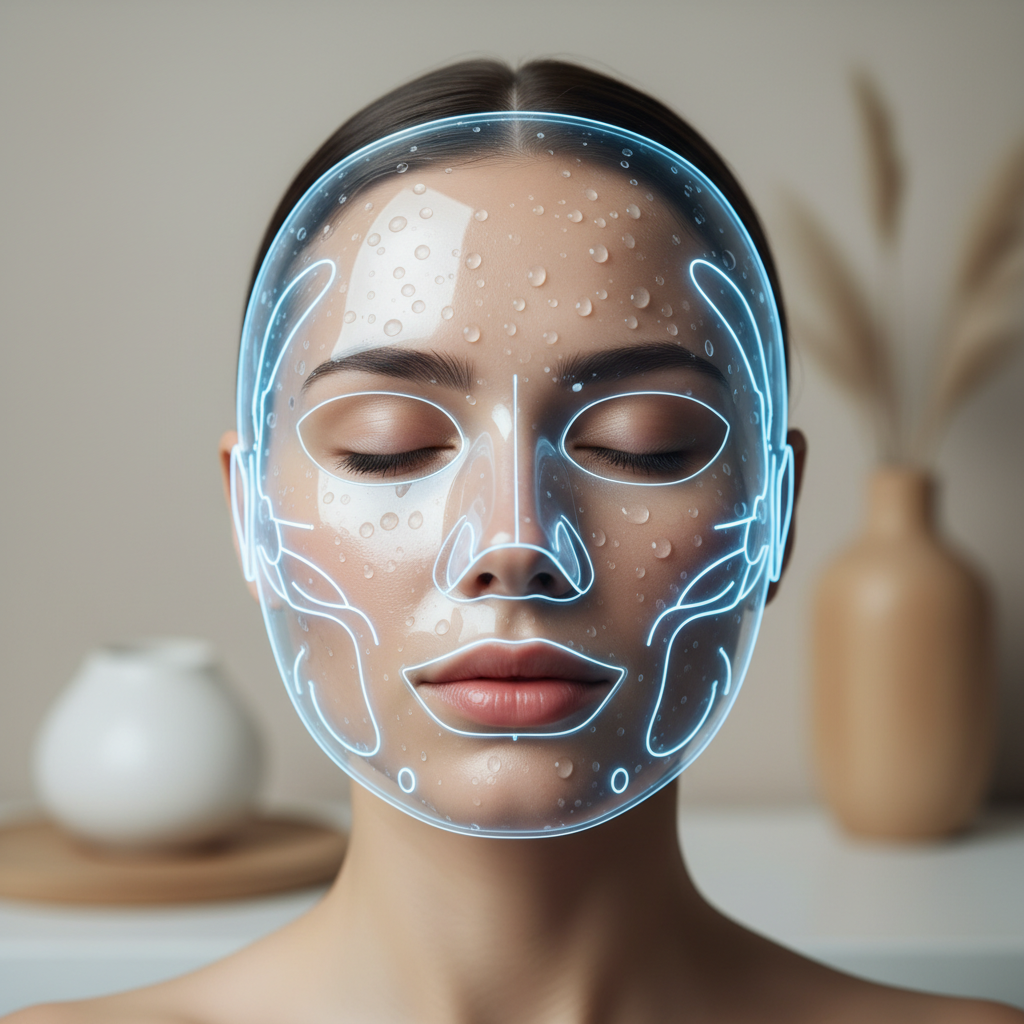
Budget Red + NIR LED Face Mask (660nm + 830nm)
$40–$90
View on Amazon →
Why Wavelengths Matter More Than Price
The most important technical variable in LED therapy is not price — it is wavelength accuracy and irradiance. A $60 device with accurate 660nm + 830nm LEDs and 25 mW/cm² irradiance will outperform a $150 device with 700nm LEDs and 10 mW/cm² irradiance, every time.
Cytochrome c oxidase — the primary cellular photoreceptor — has absorption peaks at approximately 660nm and 830nm. A device operating at 700nm still stimulates some response but at a fraction of the efficacy of the peak wavelength. The difference between 660nm and 700nm is invisible to the human eye (both appear red) but biologically significant.
Some budget manufacturers use 660nm LEDs accurately but substitute 780–800nm LEDs for the NIR component because they are cheaper than true 830nm diodes. This matters: 780–800nm has weaker evidence for skin applications than 830nm.
For a budget purchase, contact the manufacturer and ask for the specific peak wavelengths measured via spectrometer, not just the LED specification sheet wavelengths. Transparent manufacturers will provide this data.
Our Budget Picks Ranked
The budget LED device market is dominated by devices from Asia-Pacific manufacturers, many of which share common LED components. At this price range, it's worth investing time in verifying specifications before purchasing. Here are our evaluation criteria and picks:
Best for consistent wavelength accuracy at budget price: Look for devices from established beauty tech brands (rather than completely unbranded listings) that specify 660nm + 830nm, show a minimum LED count of 100+, and provide at least a 30-day return window. Verify these via the product listing's specifications tab, not just the marketing copy.
Best for acne-focused budgets: Devices combining 415–430nm blue and 660nm red cover both the antimicrobial (blue) and anti-inflammatory/regenerative (red) wavelength ranges. This combination has good evidence for acne management and provides a two-in-one anti-aging and acne protocol.
Best for portability at budget price: LED wand devices (handheld, targeted treatment) are significantly less expensive than full-face masks and allow precise targeting of specific concern areas. Trade-off: they require time-intensive manual movement and cannot treat the full face simultaneously.
Budget reality check: At under $100, expect to verify specifications yourself, expect fewer LEDs than premium devices, and expect that session times may need to be longer to accumulate adequate dose. The efficacy ceiling is lower than premium devices, but consistent use of a well-specified budget device will produce visible improvements.
How to Maximise Results on a Budget Device
With a budget device, optimising your protocol is more important than with a premium device, because the margin for error is lower:
Consistency over intensity: Budget devices typically have lower irradiance than premium options, which means each session delivers less total energy. Compensate by being highly consistent — 5 sessions per week of 15–20 minutes will outperform 2 sessions per week of a premium device used sporadically.
Apply immediately post-session: The 20–30 minutes following LED therapy is the highest-absorption window for subsequent skincare. Apply hyaluronic acid serum, then a peptide moisturiser, immediately after your session. The temporary increase in cellular metabolic activity and mild barrier permeability enhancement is real at consumer device power levels.
Clean skin only: Ensure skin is completely clean and product-free before treatment. Some topicals (particularly those with photosensitising ingredients like St John's Wort, some retinoid formulations, or high-strength AHAs) can interact with light and cause irritation or inconsistent results.
Track progress: Take standardised photos in the same lighting every 4 weeks. Budget device results build slowly — expecting dramatic change within 2 weeks will lead to discouragement before meaningful collagen remodelling has occurred. The timeline for visible collagen-related improvements is 8–16 weeks of consistent use.
Author
Glowstice Editorial
The Glowstice editorial team consists of skincare researchers, cosmetic chemists, and science writers dedicated to translating peer-reviewed dermatology into practical guidance for curious consumers.