
Affiliate disclosure: This article contains Amazon affiliate links. As an Amazon Associate, Glowstice earns from qualifying purchases — at no extra cost to you. Our editorial recommendations are independent of these partnerships. Learn more.
The 'topical Botox' claim is simultaneously the most effective and most misleading marketing framing in modern skincare. Effective because it immediately communicates the intended benefit — reduced expression line depth. Misleading because it implies functional equivalence that does not exist. Botulinum toxin and neuropeptides like Argireline share a biological target — the neuromuscular junction — but their mechanisms, delivery, potency, and clinical outcomes differ enormously. Understanding the real comparison reveals what neuropeptides genuinely can achieve, which turns out to be meaningful on its own terms.
How Botulinum Toxin Actually Works
Botulinum toxin type A (Botox, Dysport, Xeomin) is a bacterial neurotoxin produced by *Clostridium botulinum*. When injected into the muscle belly or at the neuromuscular junction, it is internalised by the motor neuron via endocytosis and cleaves SNAP-25 — one of the three SNARE complex proteins required for acetylcholine vesicle fusion.
**The mechanism**: By cleaving SNAP-25 (rather than merely competing with it), botulinum toxin permanently disables the SNARE complex in that neuron until the cleaved SNAP-25 protein is replaced through natural protein turnover — a process taking 3–6 months. During this window, the neuron cannot release acetylcholine at the neuromuscular junction, the muscle receives no contraction signal, and remains flaccid.
**Why injection is essential**: Botulinum toxin is a large protein (150 kDa) that cannot penetrate intact skin at any meaningful depth. Its mechanism requires entry into the motor neuron — which requires injection to the appropriate tissue depth. No topical delivery system currently exists that can achieve neuromuscular delivery of botulinum toxin.
SNARE Inhibition: The Shared Mechanistic Target
Argireline (acetyl hexapeptide-3/8) was specifically designed by Lipotec (a Spanish cosmetic peptide company) to mimic the N-terminal sequence of SNAP-25 — the same protein that botulinum toxin cleaves.
Argireline's amino acid sequence: Ac-Glu-Glu-Met-Gln-Arg-Arg-NH₂ — the first six residues of the SNAP-25 N-terminus. The rationale: if the peptide looks like SNAP-25's binding domain, it can compete with the full SNAP-25 protein for SNARE complex assembly — partially inhibiting vesicle fusion without cleaving anything.
**The competitive vs. proteolytic distinction**: Argireline competes reversibly for the SNARE binding site. Botulinum toxin cleaves irreversibly. This difference determines both the safety profile (competitive inhibition is inherently self-limiting; protease activity is not) and the potency (competitive inhibition is partial; protease-mediated SNAP-25 removal is complete).
The mechanism is legitimate and published. Argireline genuinely inhibits acetylcholine release in neuromuscular junction models. The question is magnitude — how much inhibition does topical application achieve?
Related Reading
Editor's Product Picks
Affiliate links — we earn a small commission at no extra cost to you.
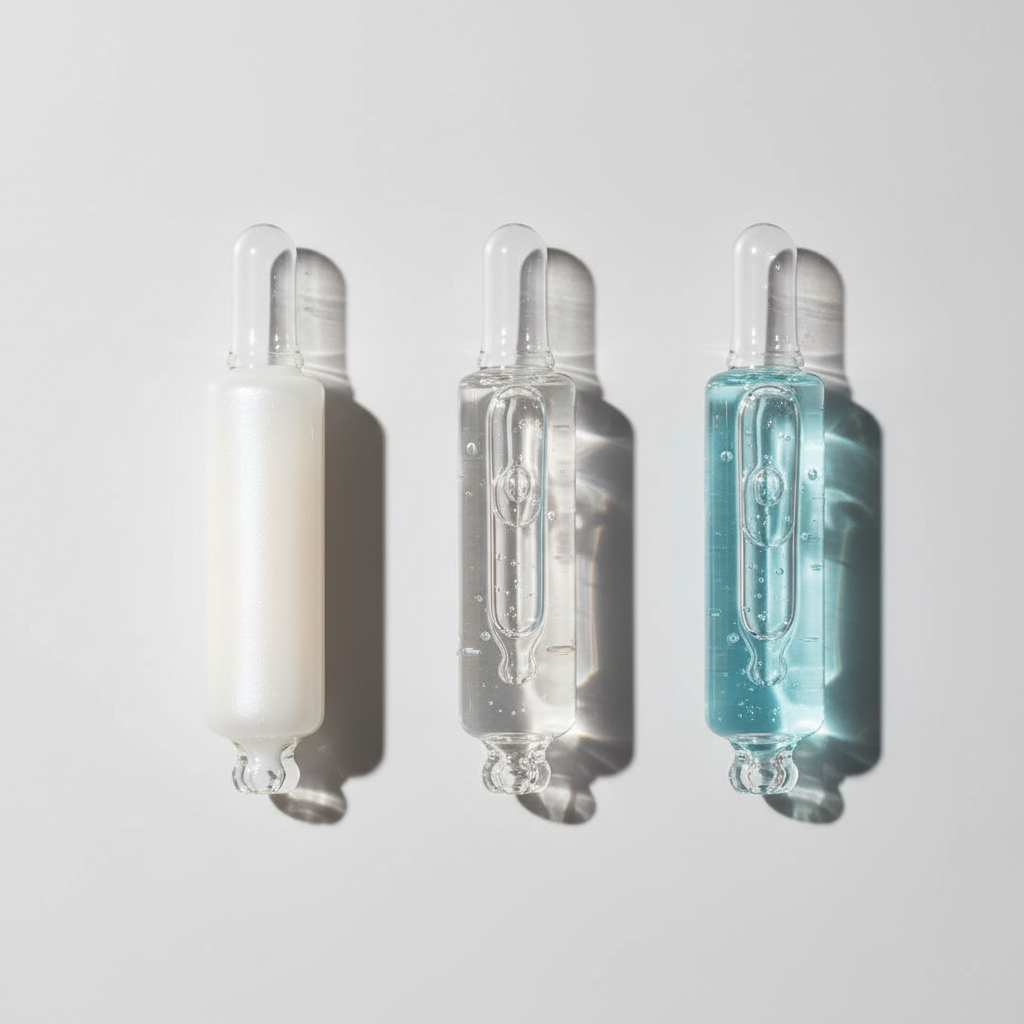
The Ordinary Argireline Solution 10%
$8–$12
View on Amazon →Leuphasyl + Argireline Synergistic Peptide Serum
$25–$50
View on Amazon →
Drunk Elephant Shaba Complex Eye Serum
$65–$75
View on Amazon →Five Key Differences from Botulinum Toxin
**1. Delivery and concentration at target**: Injectable Botox reaches the motor neuron at high local concentration — nanogram quantities achieve complete SNAP-25 cleavage. Topical Argireline penetrates the stratum corneum at <5% efficiency even in optimal formulations, arriving at the neuromuscular junction (well into the dermis, adjacent to muscle) at a fraction of the applied dose. The effective concentration at target is orders of magnitude lower.
**2. Mechanism reversibility**: Botulinum toxin: irreversible until SNAP-25 turnover (3–6 months). Argireline: continuous competitive inhibition requiring daily application. Effect wanes within days of stopping use.
**3. Selectivity**: Botox is injected with anatomical precision — specific muscles are targeted by the injector. Argireline is applied topically to a skin zone, affecting any neuromuscular junction that receives sufficient peptide — less spatial control.
**4. Magnitude of effect**: Published Botox studies show 80–100% reduction in dynamic muscle contraction amplitude. Published Argireline studies show 17–30% reduction at 5–10% concentration. Meaningful — but a fraction of botulinum toxin's effect.
**5. Muscle atrophy risk**: Long-term Botox use causes measurable reduction in treated muscle volume (atrophy from disuse). No evidence of this with Argireline — the partial, reversible inhibition does not produce sustained enough muscle inactivity to cause atrophy.
Clinical Reality: What Neuropeptides Actually Achieve
**Published clinical data for Argireline**: - **2002 RCT** (Lipotec, published *International Journal of Cosmetic Science*): 30% reduction in crow's feet depth at 30 days vs vehicle in women 35–60 (5% and 10% Argireline formulations) - **2015 double-blind RCT**: Significant improvement in forehead line depth with 5% Argireline at 4 weeks vs placebo - **Consumer evidence**: Extremely high reported satisfaction in consumer reviews for eye area and forehead — high-volume expression zones where the partial inhibition is most perceptible
**What neuropeptides do well**: - Reduce the appearance of fine dynamic expression lines — particularly early-stage, superficial crow's feet and forehead lines - Complement the results of Botox treatment between injection sessions (many injected patients use Argireline to extend perceived results) - Provide progressive, subtle effect that doesn't produce the 'frozen' look possible with Botox
**What neuropeptides don't do**: - Significantly affect deep static wrinkles (nasolabial folds, marionette lines present at rest) - Produce the dramatic, predictable results of neurotoxin injection - Replace structural interventions for significant facial volume loss
Who Benefits Most from Neuropeptide Skincare
**Ideal neuropeptide users**:
**25–40, prevention focus**: Dynamic expression lines are superficial in this age group — early-stage crow's feet, faint forehead lines. Neuropeptide serums at 5–10% applied consistently produce meaningful results in this population. Prevention is significantly easier than reversal.
**Botox users between sessions**: Many experienced Botox patients report that Argireline serums extend the perceived duration of their injections — the partial SNARE inhibition supplements waning botulinum toxin effect in months 3–4 post-injection.
**Users who prefer non-invasive options**: A meaningful segment of skincare consumers will not consider injection regardless of efficacy. For this group, 17–30% reduction in dynamic line depth from consistent neuropeptide use is genuinely valuable — there is no available alternative that achieves the same mechanism topically.
**Combination with structural peptides**: Neuropeptides address the contraction side of expression-line formation; Matrixyl addresses the structural collagen side. Together — one reducing the mechanical force, the other rebuilding the collagen resilience — they represent the most comprehensive non-injectable approach to expression lines currently available.
Author
Glowstice Editorial
The Glowstice editorial team consists of skincare researchers, cosmetic chemists, and science writers dedicated to translating peer-reviewed dermatology into practical guidance for curious consumers.